
Copy and Photos Supplied.
Besides the aura of revitalisation in nature offered by the months of spring, this is also a critical time in the lifecycle of a vineyard, with the vines flowering before berry-set, which sees pin-head sized baby grape-berries being formed on the tiny stems. On Le Chant vineyards in the Polkadraai region of Stellenbosch, these phases are now almost complete with most of the flowering having made way to berries, bringing the anticipation of next year’s harvest to the fore.
“It’s all systems go now,” says Petri Venter, winemaker at Le Chant. “Flowering is almost done, and most of the vines are showing their tiny green bunches. Before we open our eyes, the harvest of 2024 will be upon us as we head into the southern hemisphere summer.”
And after a cold, wet winter saw the vines shut down in a state of dormancy and well-deserved rest, the red and white varieties on Le Chant are showing evenness and robust health in the next growth cycle. “Flowering and berry-set are pivotal stages in the growth cycle of grapevines,” says Petri. “These phases significantly influence not only the potential yield but also the characteristics of the grapes, thereby impacting the quality of the resulting wine vintage. Understanding these stages and their implications helps myself and the vineyard team to optimise our practices for better outcomes in the pending vintage.”

Flowering generally occurs in late spring to early summer, depending on the grape variety and climatic conditions. This phase is crucial because it marks the transition from vegetative growth to reproductive growth within the vine. Successful flowering is essential for the formation of healthy grape clusters, as it determines the number of fruiting buds that will eventually develop into grapes. “Several environmental factors can influence the success of flowering,” says Petri. “Temperature, humidity, wind and sunlight exposure all play critical roles. Ideal conditions promote a higher percentage of flowers that will be pollinated and set fruit, while adverse conditions can lead to poor fruit set and shed flowers, resulting in
lower yields. Fortunately, Le Chant has experienced a mild spring with the required levels of sunshine to ensure even, balanced flowering among all our varieties used in making Le Chant Blanc and Le Chant Rouge. The south-easterly wind, a resident among our vines, arrived later this year, adding to the mild temperatures.”
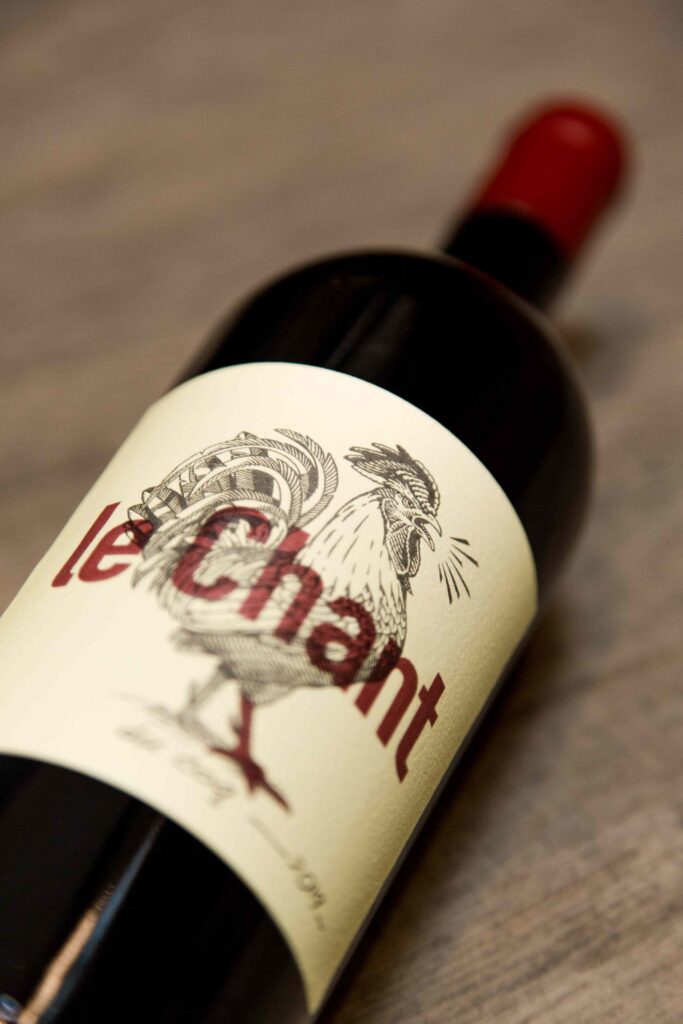
Le Chant Blanc is a Chenin Blanc wine made from predominantly older vines, while the Rouge is a blend of Merlot, Cabernet Sauvignon, Cabernet Franc, Shiraz and Sangiovese. In addition to quantity, flowering affects the qualitative aspects of the grapes. The health of the flowers directly impacts the vine’s ability to produce fruit that has desirable flavours, acidity, and tannin structure.
“Berry-set occurs shortly after flowering when the fertilised flowers develop into small green berries, marking another crucial point in the vine’s life cycle – and this is where Le Chant is now,” says Petri. “The berry-set phase completes the transition from the reproductive stage of the vine. Successful berry-set leads to the formation of grape clusters, which are essential for the next stages of growth and for the development of ripe grapes for making quality wine.”
The berry-set process is influenced by various factors, such as vine health, nutrient availability, and climatic conditions. “Le Chant’s Polkadraai terroir, some 8 km from the Atlantic Ocean and exposed to a constant southerly breeze in spring and summer, ensures healthy berry-set, complemented by the organic farming practices we adhere to,” says Petri.
Both flowering and berry-set significantly influence the characteristics of the grapes that will be harvested in the upcoming vintage. The number of flowers and successful fruit set determines the crop load for that year, which can directly impact the yield. A heavier crop might dilute flavours, and if the vineyard is not well managed, it can lead to sub-par wine quality.
“We want to achieve balance, and this is what I am seeing in this year’s spring,” says Petri. “There are enough formed bunches to ensure a healthy yield for making wines in the volume the market expects from us, but no excessive growth that could potentially dilute quality.”
Petri says the recent rain experienced in the Stellenbosch region was just enough to cool down and moisten the soil, and not heavy enough to impact on the vines that are still flowering. To maximise the potential of flowering and berry-set, general vineyard management practices are crucial. Timing of pruning, management of canopy growth, and water and nutrient management must all be carefully coordinated. Additionally, measures like pest and disease control during these critical stages are essential to safeguard the health of the flowers and developing berries.
Practices such as shoot thinning, leaf removal, and appropriate irrigation techniques can enhance sunlight exposure and air circulation, promoting better flowering and fruit set. These measures not only encourage a healthy yield but also contribute to the overall quality of the grapes produced.
“Every day in the vineyard is special – that’s what makes it so great being a winemaker,” says Petri. “But flowering and berry-set is especially exciting as the vines and the formed bunches develop on a daily basis and you are reminded of the reality that wine is, in every aspect, a living thing.”